
YOUR CHART IS ANOTHER WAY OF UNDERSTANDING YOU.
Human Design is already woven into the way I work with you inside your home, but there’s a whole lot more to you than where you keep your things.
Your chart can give you another language for understanding yourself—how you make decisions, how you use your energy, what environments support you, how you move through the world and how you relate to the people around you.
For me, Human Design isn’t about telling you who you’re supposed to be.
It’s about getting curious about who you already are.
WHAT CAN WE EXPLORE?
I’M NOT HERE TO TELL YOU WHO TO BE.

I’m not interested in giving you another list of rules about how you’re supposed to live according to your chart.
You are always the expert on you.
I’m interested in helping you understand yourself better.
Sometimes your brain says one thing and your body says another.
Sometimes you’ve spent years overriding what you know because you thought there was a better, more acceptable or more practical way to be.
Sometimes you just need someone to sit beside you and say, “Yep. That makes sense.”
A reading is an opportunity to slow down, get curious and start seeing yourself through a different lens.
You don’t have to become someone else.
Maybe the most useful thing your chart can show you is that you were never supposed to.
Sometimes we just need language for what we’ve known about ourselves all along.
If you’ve come here from my organizing work, you’ve already met Human Design. I use it because before I start creating systems around you, I want to understand the human I’m creating them for.
But Human Design has given me language for so much more than where you keep your shit.
When I first started learning about my own chart, there were so many moments of Ohhhh. THAT makes sense.
I’m a Manifesting Generator, and I’ve always been someone who tries lots of things. I dabble over here, get completely absorbed in something over there, walk away from things and come back to others.
Seeing that part of myself through Human Design gave me another way of understanding something I’d spent years thinking I probably shouldn’t do.
Then I learnt about my open Solar Plexus and suddenly I had language for something else I’d been living with for years. I’ve always felt other people’s emotions deeply, trying to keep the peace and keep everyone around me feeling good because I learned very early that if everyone else was okay, I could be okay too. I think that was the biggest shift for me. I was given language for parts of myself I’d spent years managing, masking or trying to change, and another way of asking what might happen if I was allowed to understand them instead.
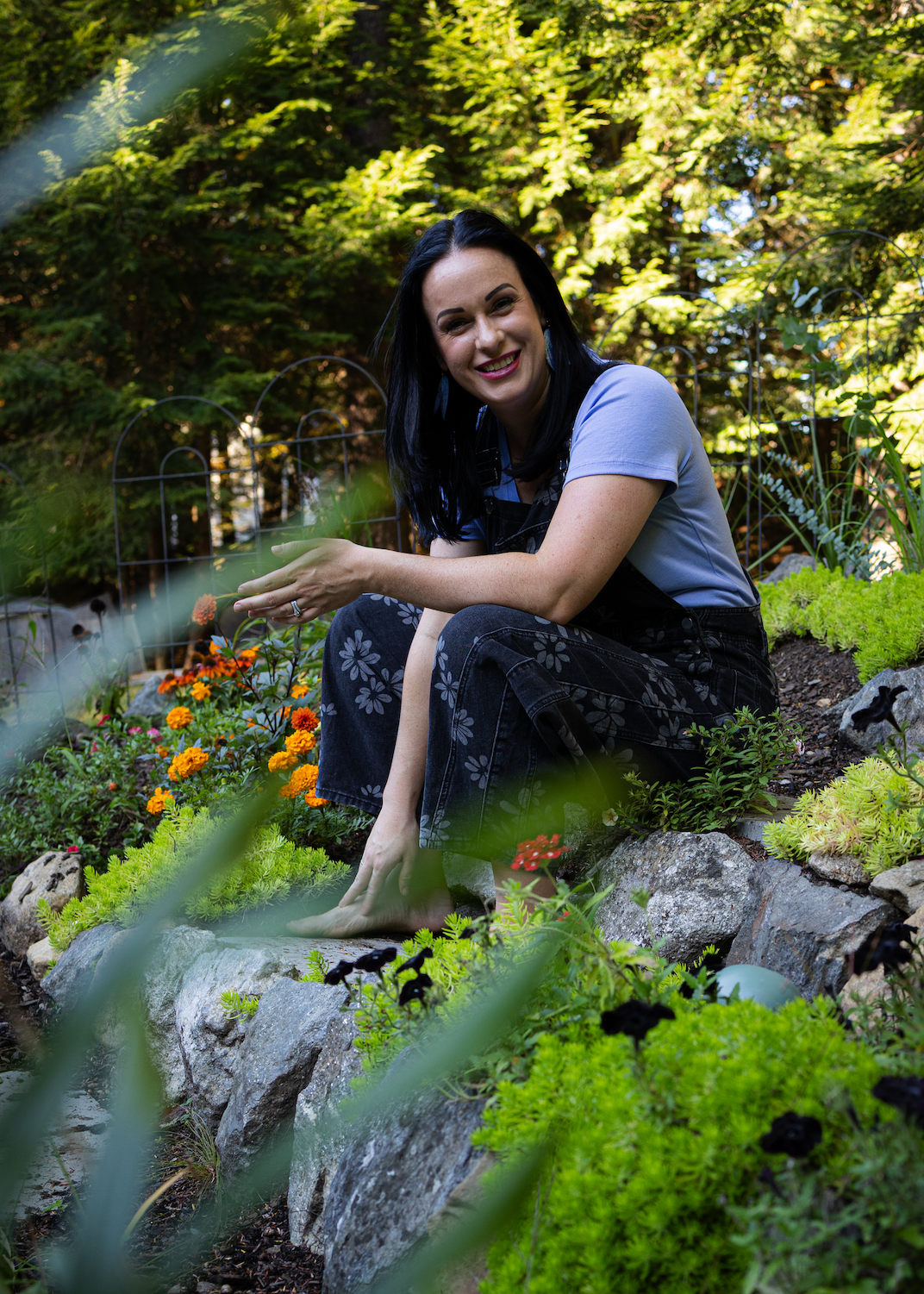
You’re here to be the weirdo.
As a neurodivergent person, I think that’s a big part of why Human Design landed so deeply for me.
When you’ve spent a lot of your life already feeling different, trying to work out who you’re supposed to be and how everyone else seems to be doing this whole human thing, it’s incredibly validating exploring a system that’s actually interested in your differences rather than trying to make you fit everybody else.
It helped me recognize things in myself that I’d never really considered as gifts before. It gave me language for experiences I hadn’t known how to explain, but also offered a place to get curious about who I actually was underneath all the shit I’d picked up about who I was supposed to be.
You’re not here to be like everybody else. We are literally here to be the weirdos.
I read the chart, but I’m listening to you.

This is probably the easiest way I can explain how I do a Human Design reading.
I’m not sitting opposite you delivering information from a chart while you try to remember what the fuck any of it means.
I’m listening to you.
Something you say might catch against something I’m seeing in your chart. Then I’ll ask a question, you’ll tell me about an experience, something else will open up and we’ll follow it together.
Sometimes I’m giving language to something you’ve known about yourself forever, but sometimes we’re looking at something you haven’t really seen in yourself yet too.
Your chart gives us another way into your human, and that’s the part I’m obsessed with.
What if it’s your child you’re trying to understand.
Some of the most profound readings I’ve done have been helping parents understand their children. Because your child isn’t an extension of you. They’re their own person.
Personally, I think this is where Human Design is brilliant at giving us another way to get curious about the humans we’re raising. How are they different from us? How do they make decisions? What do they need? What happens when we stop trying to make them operate like somebody else and start paying attention to who they actually are?
Which, now that I think about it, isn’t all that different from what I’m doing when I’m standing in someone’s home.
I don’t want to organize your house for some imaginary version of you who will suddenly maintain the perfect system forever. I want to understand the actual human living there.
Human Design gives me another way to ask the same question
Who is this human, actually?
And whether we’re looking at you, your child, your family or the way you move through your home and your life, that’s where we begin.